 Helrig Box
How this repository is put together
The Helrig Box's firmware is ToneRelay, an open-source Wi-Fi relay for Helix pedals by Mark Peskett. What makes a
ToneRelay build a Helrig Box is a small profile (profile/): the names the box shows the network (Helrig Box e7fb0b, helrigbox.local), the
page it serves for Wi-Fi setup, and its defaults (relay-only on). Everything else, the relay, the USB handling and the Wi-Fi code, is ToneRelay's,
and improvements to it go back to ToneRelay.
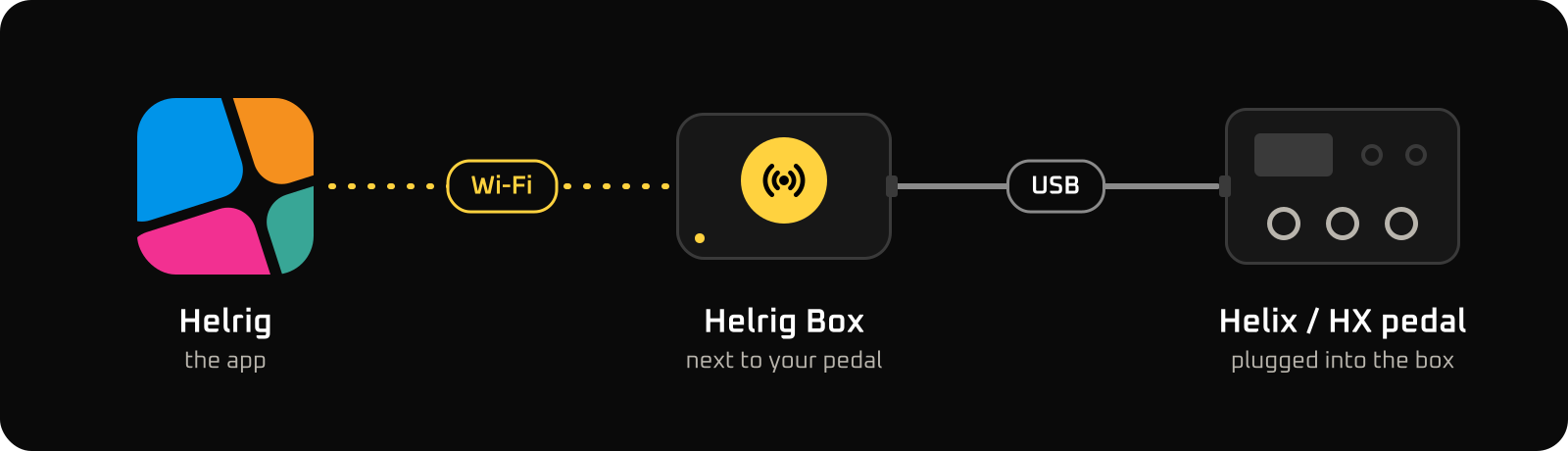
The box carries the pedal's USB transfers and does not interpret them; Helrig is the only thing that speaks the pedal's protocol. The contract
between the two is ToneRelay's docs/raw-relay-protocol.md.
| Path | What it is |
|---|---|
profile/profile.c |
The Helrig Box's names and defaults. |
profile/setup.html |
The setup and status page the box serves (about 9 KB, no network requests, the logo inline). |
brand/ |
The lockup, icon and diagram SVGs, and the brief the setup page follows. Helrig's artwork: see NOTICE.md. |
scripts/build.sh, scripts/flash.sh |
Build ToneRelay with this profile; flash it, and optionally clear the box's settings. |
hardware/casing/ |
The 3D-printable case (STL files, previews and print notes), an adaptation of a CC BY 4.0 model: see NOTICE.md. |
scripts/package-web.sh |
Split the build into the parts the web flasher writes. |
web/ |
The site at box.helrig.com, deployed by Vercel: the overview, the web flasher (/flash, from web/flash.template.html) and the docs, which build-docs.mjs builds from README.md, docs/ and hardware/, all with the same navbar (releasing). |
third_party/ToneRelay |
ToneRelay's source, pinned (a submodule). Until the changes this depends on are merged upstream, it points at a fork. |
See also: build from source, releasing, setup page, measurements.